
In 2026, businesses big and small continue to use search advertising to reach customers online. The two biggest platforms for this are Google Search Ads and Microsoft Ads (formerly called Bing Ads). Both help you show your ads when people search for keywords online, but their costs, audience size, and performance can be very different.
In this blog, we’ll compare both platforms with a focus on costs in 2026, why those costs differ, and how to decide which platform is best for your budget and goals. We’ll keep the language simple and clear for marketers and business owners alike.
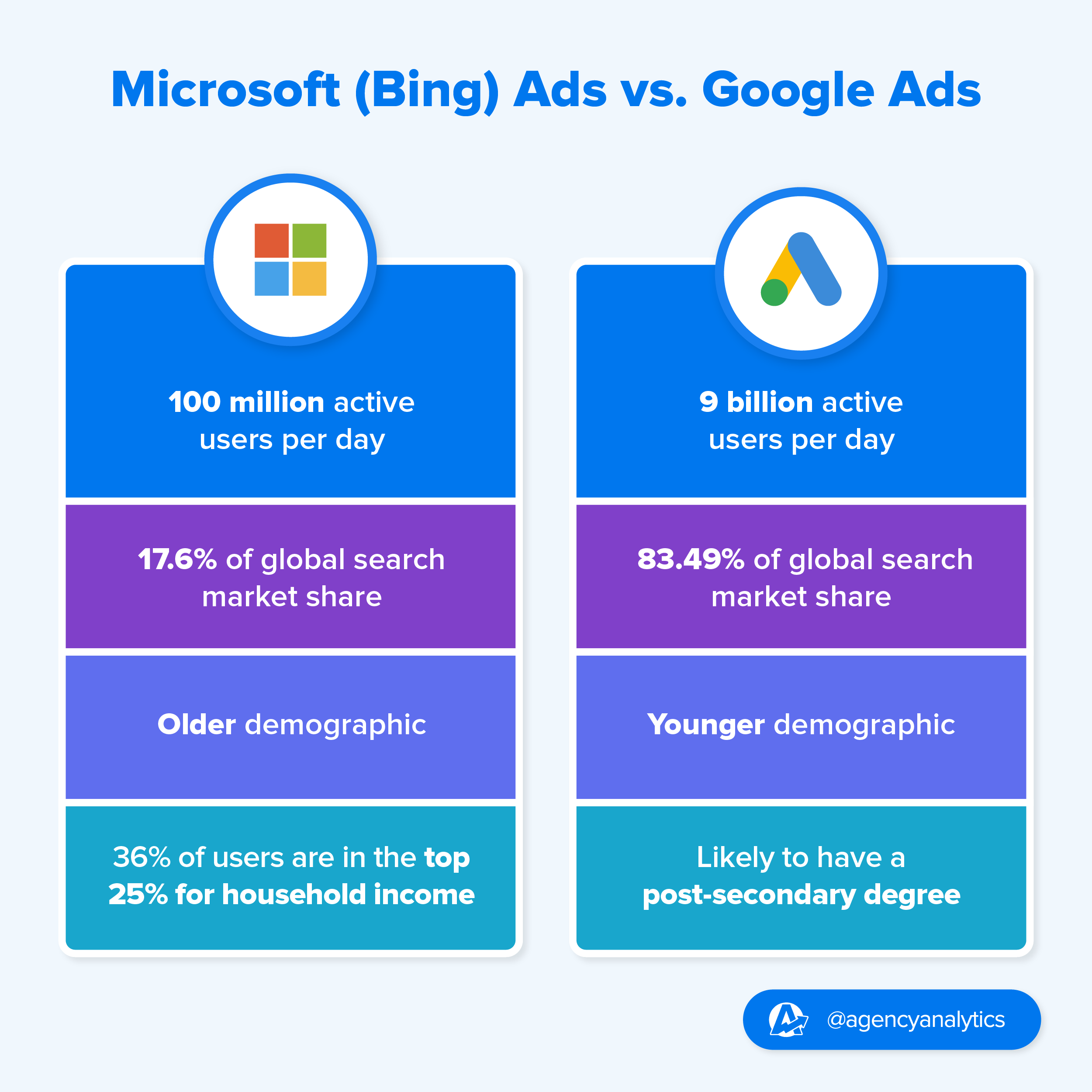 |
| Google Search Ads vs Microsoft Ads Cost Comparison 2026? |
1. What Are Google Search Ads and Microsoft Ads?
Google Search Ads
Google Search Ads are text ads shown on Google search results when people search for keywords you target. Google dominates global search with a huge share of search traffic, meaning more people see your ads.
Microsoft Ads
Microsoft Ads show ads on Bing, Yahoo, AOL, and other partner sites. It’s smaller than Google in total audience reach, but it’s growing and often much cheaper per click.
In simple terms: Google Ads = big audience, higher cost, Microsoft Ads = smaller but often cheaper audience.
2. Why Cost Matters in Search Advertising
When you pay for search ads, you usually use a pay-per-click (PPC) model. This means:
📍 You pay only when someone clicks your ad
📍 Your cost depends on how many competitors are bidding on the same keyword
📍 Two big cost measures are:
- CPC (Cost Per Click) – how much each click costs
- CPA (Cost Per Action) – how much each desired action (like a sale or signup) costs
Advertisers love comparing Google and Microsoft because they want to spend less while getting more value.
3. How Much Do Ads Cost in 2026?
Google Search Ads Cost
Google’s ads tend to be more expensive because:
- Google has huge search volume, so more advertisers bid on the same keywords
- Competition leads to higher bids for popular words
Typical Google keyword CPCs in recent years have ranged roughly from $2.50 to $5 or more, depending on industry and competition level.
On very competitive keywords (like legal services or insurance), costs can be much higher, sometimes tens of dollars per click on premium keywords.
Microsoft Ads Cost
Microsoft Ads generally cost less per click than Google. Most industry reports show Microsoft’s CPC 20% to 50% lower than Google’s for similar keywords.
For example:
- Google CPC (search): about $2.85–$5.26
- Microsoft Ads CPC: about $1.50–$2.80
This means you often save 30% or more per click when using Microsoft Ads.
4. Why Microsoft Ads Costs Are Lower
There are a few reasons:
Less Competition
Fewer advertisers use Microsoft Ads compared to Google, which keeps auctions less competitive and CPCs lower.
Smaller Audience
Microsoft’s search network has a smaller share of global searches than Google — but this is part of why advertisers pay less.
Different User Demographics
Microsoft users are more likely to be professionals or older desktop searchers, which can mean quality clicks at a lower price.
5. Cost Comparisons by Metric
Average Cost-Per-Click (CPC)
| Platform | Typical CPC |
|---|---|
| Google Search Ads | ~ $2.50 – $5+ per click |
| Microsoft Ads | ~ $1.45 – $2.80 per click |
This simple table shows that Microsoft Ads tend to have lower CPC compared to Google — often by 30% or more.
6. Other Cost Metrics: CPA and ROAS
Cost-Per-Action (CPA)
CPA measures how many dollars you spend for a conversion (sale, lead, etc.). Typical estimates show:
- Google CPA: around $48
- Microsoft CPA: around $38.50
- This suggests Microsoft can be cheaper for acquiring customers in many campaigns.
ROI and ROAS (Return On Ad Spend)
Return on Ad Spend tells you how much revenue you earn for every $1 spent.
- Google often delivers strong ROAS due to huge reach
- Microsoft sometimes offers better ROAS because of lower cost and high-intent audiences
In many studies, advertisers have found ROAS from Microsoft can rival or exceed Google — particularly for niche markets.
7. Audience Reach and Traffic Volume
Even though Microsoft Ads cost less, Google has much more traffic.
Market Share & Reach
- Google has about 90%+ global search market share — meaning billions of searches.
- Microsoft’s search network (including Bing, Yahoo, AOL) has a smaller overall share but still reaches millions of users.
This is why Google tends to deliver more clicks and conversions overall — because simply more people use Google.
8. Conversion Quality and Performance
Google Ads
- High search volume means more opportunities for clicks
- Google’s advanced optimization tools and data often help deliver strong conversions
- Good option if you want maximum visibility
Microsoft Ads
- Lower cost doesn’t always mean lower quality
- Many advertisers report good lead quality because Microsoft searchers often indicate strong intent, especially in B2B and professional sectors.
Some smaller advertisers find Microsoft Ads cost-effective for testing new keywords before scaling on Google.
9. Choosing the Best Platform for Your Budget
There’s no one-size-fits-all answer, but here are some suggestions:
If you have a big budget
- Prioritize Google Search Ads first for maximum reach
- Use Microsoft Ads to complement and expand reach without breaking the bank
If your budget is limited
- Start with Microsoft Ads to get affordable clicks and conversions
- Expand to Google when you’ve found winning keywords
For B2B and professional audiences
- Microsoft Ads may offer better results, as LinkedIn and Bing overlap with business-focused users.
For large-scale consumer campaigns
- Google Ads still usually gets more overall traffic and broad visibility.
10. Future Cost Trends in 2026 and Beyond
Costs in search advertising change yearly due to:
- Increased competition
- AI tools optimizing campaigns
- New formats like image ads and video search placements
By 2029, analysts project that AI-driven search ad spend will grow significantly, which could affect future CPCs and strategies.
At the same time, Microsoft continues to expand its advertising network by integrating smart tools and partnerships that could further affect cost balances.
11. Final Thoughts: Google vs Microsoft Ads in 2026
Here’s the bottom line in simple terms:
Google Search Ads
✅ Massive reach
✅ High volume traffic
❌ Higher cost per click
Microsoft Ads
✅ Lower CPC and lower overall cost
✅ Good for budget-conscious advertisers
❌ Smaller audience size
Many advertisers use both platforms together. Google captures the broad audience, while Microsoft gives you affordable clicks and niche traffic.
Conclusion
Choosing between Google Search Ads and Microsoft Ads in 2026 comes down to your budget, goals, and who you want to reach. If you’re after huge reach and don’t mind higher costs, Google is still the king. But if you want to save money or target professional audiences with cost-effective ads, Microsoft Ads is a smart option.
If you’re ready to build a full PPC strategy, consider running test campaigns on both platforms and then optimize based on what gives you the best result for your money.
Related Questions & Answers
How do Google Search Ads and Microsoft Ads costs generally compare in 2026?
In 2026, Google Search Ads usually remain more expensive because of higher competition and larger advertiser demand. Microsoft Ads tend to offer lower average CPCs, often 20–40% cheaper, making them attractive for advertisers seeking cost efficiency and comparable intent-driven traffic.
Why are Google Search Ads expected to be costlier than Microsoft Ads in 2026?
Google dominates global search market share, attracting more advertisers across industries. This intense competition drives up keyword bidding costs. Microsoft Ads have a smaller but stable audience, resulting in less bidding pressure and comparatively lower costs for similar keywords.
Which platform offers better ROI in 2026: Google Search Ads or Microsoft Ads?
ROI in 2026 depends on industry and audience. Google delivers massive reach and high intent, often generating volume. Microsoft Ads frequently provide higher ROI due to lower CPCs and strong conversion rates among desktop, professional, and enterprise-focused users.
How does keyword competition affect ad costs on both platforms in 2026?
In 2026, keyword competition on Google remains intense, especially for high-CPC niches like finance and SaaS. Microsoft Ads experience lower competition for the same keywords, allowing advertisers to win auctions at reduced bids while maintaining strong ad visibility.
Are conversion costs lower on Microsoft Ads compared to Google in 2026?
Yes, in many cases conversion costs on Microsoft Ads are lower in 2026. While traffic volume is smaller, users often show higher purchasing intent. Google conversions can be more expensive due to competition but offer scalability for large campaigns.
How does audience quality influence cost differences in 2026?
Google attracts a broad global audience, increasing both reach and cost. Microsoft Ads target users on Bing, Edge, and LinkedIn-integrated data, often professionals and higher-income users. This focused audience can reduce wasted spend and lower effective acquisition costs.
Do automation and AI bidding affect costs differently in 2026?
In 2026, both platforms use advanced AI bidding. Google’s automation often increases CPCs to maximize exposure. Microsoft’s automation remains more conservative, helping advertisers maintain budget control and achieve efficient cost-per-click and cost-per-acquisition results.
How do industry-specific costs compare between platforms in 2026?
Industries like insurance, legal, and finance remain very expensive on Google in 2026. Microsoft Ads usually offer the same industry keywords at lower rates, making them appealing for niche B2B and high-value services targeting decision-makers.
Is Microsoft Ads more suitable for small budgets in 2026?
Yes, Microsoft Ads are often better for small or medium budgets in 2026. Lower CPCs and less competition allow advertisers to test campaigns without heavy spending, while Google Ads may require higher budgets to achieve meaningful visibility.
Which platform should advertisers prioritize for cost efficiency in 2026?
For pure cost efficiency in 2026, Microsoft Ads often win due to lower CPCs and conversion costs. However, Google Search Ads remain essential for scale and reach. Many advertisers achieve the best results by combining both platforms strategically.
