
In today’s digital world, financial companies are fighting for attention on search engines where customers look for advice, services, and financial products every day. A Google Search Ads keyword research service for the finance niche helps these companies understand exactly what potential customers are typing into Google when they are ready to choose a credit card, compare loans, look for investment advice, or find a financial advisor. This means identifying the words, phrases, and search terms that matter most so financial ads show up at the right moment to the right people.
 |
| Google Search Ads Keyword Research Service for Finance Niche? |
When someone types a query into Google, like “best savings account interest rates” or “financial planner near me,” that search is an opportunity to show a text ad above the organic search results. But to capture those moments well, you first need to know what exact search terms people are using and how valuable they are for your business. This is the core of keyword research for Google Search Ads in the finance niche.
What Is Keyword Research for Google Search Ads?
Keyword research is the process of discovering the exact words and phrases that potential clients use when they search on Google for finance-related services. For example, someone might search for “retirement planning advice,” “business loan interest rates,” or “wealth management services.” A keyword research service will identify which keywords have high or growing search interest, how competitive they are, and how much it could cost to bid for them in an ad campaign.
When financial marketers use this service, they don’t just get a long list of terms — they get data about search volume (how many people search for a term), competition levels, cost-per-click estimates, and search trends over time. All of these help them make smart decisions about which keywords to target — so they don’t waste money on low-value terms or miss out on valuable opportunities.
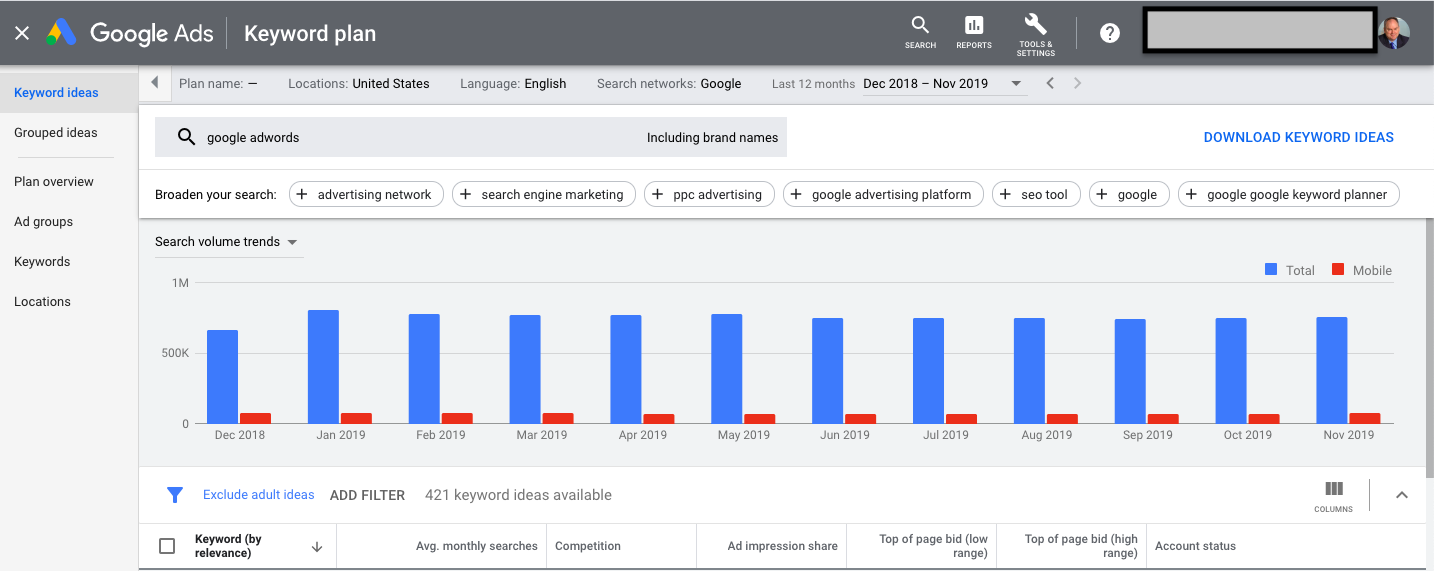
A tool that many advertisers use as part of this process is Google’s Keyword Planner. It’s built into Google Ads and helps uncover search terms related to your finance products or services, shows how often those terms are searched, suggests bid costs, and even lets you forecast estimated clicks and impressions for your chosen keywords based on your budget.
Why Keyword Research Matters in the Finance Niche
The finance niche is different from many others because the decisions customers make based on search can have serious financial consequences. People searching in this niche are often looking for financial guidance, products that involve long-term money commitments, or services that impact their wealth. For this reason, Google holds finance content to higher quality standards, especially when it affects a person’s finances or well-being. Relevance and trust matter more here than in many other industries, making keyword research even more critical.
When done well, keyword research:
- Helps identify user intent - It uncovers whether people are looking for information (“what is an APR”) or are ready to buy (“apply for a home loan today”). Understanding this difference helps financial companies craft the right ad message and landing page experience.
- Improves ad relevance and performance - Choosing the right keywords that match user intent and business offerings increases the relevance of ads. This leads to better engagement, higher click-through rates, and improved Quality Scores — a Google Ads metric that affects both your ad placement and cost-per-click.
- Optimizes advertising budget efficiently - Finance keywords can be competitive and expensive. Focusing spend on the most relevant and valuable keywords means you spend less on irrelevant clicks and more on leads that convert.
Without research, you might waste money on keywords that get many searches but bring low quality traffic. Conversely, you could also miss out on niche terms that have lower search volume but deliver highly targeted and conversion-ready visitors.
How Keyword Research Works for Finance Google Ads
Doing keyword research for a finance niche Google Ads campaign is a structured process:
1. Understand Your Audience and Services
A first step is understanding who your ideal customer is and what they might search for. A person looking for investment advice might use terms different from someone searching for debt consolidation. This “search psychology” guides your initial keyword list.
2. Use Tools Like Keyword Planner
Log in to Google Ads, and use the Keyword Planner tool to input seed terms related to your services. The tool will return related phrases along with monthly search volume, competition levels, and suggested bid costs. It also allows you to set location and language filters so you can tailor results to specific regions or demographics.
3. Evaluate Search Intent and Relevance
Not all keywords are equally valuable. For finance niches, it’s important to pick terms where the intent matches your business goals. A query like “do credit cards affect score” might be informational and good for educational content, but a term like “apply for lowest interest credit card” signals buying intent and could be more valuable for ads.
4. Consider Long-tail Keywords
Long-tail keywords are longer phrases with more specific intent (e.g., “best retirement planning services for small business owners”). They usually have lower search volume but attract users who are closer to making a decision, which can improve conversion rates and lower cost per lead.
5. Forecast and Estimate Performance
Once you have a list of potential keywords, Google Ads lets you estimate how many clicks and impressions you might get based on your daily budget. This helps you prioritize themes or terms that deliver the most value.
6. Organize into Ad Groups
Grouping closely related keywords into ad groups ensures that your ads are highly relevant to the searches. If you sell insurance and investment products, separate ad groups for each category help tailor the ad copy and landing pages more precisely.
7. Use Negative Keywords
Negative keywords prevent your ads from showing for irrelevant searches. For example, excluding “free advice” or “calculator” could save money if you want clicks only from commercial or transactional searches.
By repeating this process periodically, you keep your campaigns updated as search behavior evolves.
Special Challenges in the Finance Niche
Keyword research for finance is not trivial. The finance niche often includes high competition, technical terms, and cautious customers. There are several challenges that a keyword research service must address:
High competition for commercial keywords
Keywords related to loans, banking, and investment products often have many advertisers bidding on them. This drives up suggested bids and can make campaigns expensive if not managed well. Research helps find balance between broad competitive terms and more specific long-tail ones.
Search intent complexity
In finance, similar phrases can carry very different intents. Someone searching for “investment risk definition” has a fundamentally different goal than a user searching “best mutual fund to invest now.” Knowing this difference helps tailor whether you use the keyword in an educational campaign or a conversion-focused one.
Regulatory and compliance considerations
Financial content must be accurate and trustworthy because it affects people’s money decisions. Google’s quality standards and industry regulations mean ads must be crafted carefully, and keyword research needs to consider terms that align with compliant messaging.
Quality Score and Its Connection to Keyword Research
A critical concept in Google Ads is Quality Score. This is a measure Google uses to determine how good your ad experience is relative to the keyword you’re targeting. A strong Quality Score means your ads are more relevant, your click-through rate history is good, and your landing page delivers exactly what the user expects after clicking. This can lead to better ad positions and lower cost-per-click.
Keyword research directly impacts Quality Score because choosing relevant keywords, grouped logically into well-written ad groups, makes your ads more aligned with user intent. Poor keyword choices or mismatches between ad copy and user search terms lower Quality Score and increase costs.
Tools Beyond Google Keyword Planner
While Google Keyword Planner is a central tool, many keyword research services for finance also use additional software to enrich data. These tools might provide competitor insights, historical trends, or uncover keywords you might miss with Planner alone. Examples include SEMrush, Ahrefs, and SpyFu. SpyFu, for instance, lets you see competitors’ advertising keywords and approximate how much they spend, giving a broader view of the landscape.
Using these tools together gives a more nuanced understanding of opportunities and risks in the finance keyword market.
The Benefits of Using a Keyword Research Service
Hiring a specialized keyword research service for the finance niche brings several benefits:
- Precision targeting - Professional research finds terms that potential clients actually use, not just guesses or generic lists.
- Budget efficiency - By focusing on keywords with strong conversion potential, you spend less on irrelevant clicks and more on leads.
- Strategic insights - You learn about audience behavior, trending topics, and competitive gaps where your campaigns can shine.
- Better campaign performance - With high-quality keywords structured into well-organized ad groups, you get better ad relevance and improved Quality Scores.
Whether you’re a startup financial advisor or a large bank, knowing which keywords to target makes your Google Search Ads much more effective.
Final Thoughts
Keyword research may sound like a technical exercise of numbers and word lists, but in reality it’s the heart of a successful Google Search Ads campaign — especially in the finance niche where customer intent and decision quality matter deeply. Knowing the right search terms helps you meet your customers at the exact point they need your services and ensures your advertising budget works smartly and efficiently. With careful research, a structured approach, and the right tools, financial companies can connect with highly motivated customers and achieve stronger results from their search advertising efforts.
Related Questions & Answers
What is Google Search ads keyword research for the finance niche?
Google Search ads keyword research for the finance niche focuses on finding high-intent, high-CPC keywords related to loans, insurance, investments, and banking. It helps advertisers target users actively searching for financial solutions, improving ad relevance, quality score, and return on ad spend.
Why is keyword research critical for finance Google Ads campaigns?
Finance keywords are among the most expensive on Google Ads, so precise research is essential. Proper keyword selection reduces wasted spend, targets qualified leads, improves conversion rates, and ensures compliance with Google’s strict financial advertising policies.
How does user intent impact finance keyword selection?
User intent determines whether a keyword leads to conversions. Transactional keywords like “apply for personal loan online” perform better than informational ones. Understanding intent ensures ads appear when users are ready to take action, not just researching.
What types of finance keywords deliver the highest ROI?
High-ROI finance keywords usually include long-tail, service-specific phrases such as “best health insurance plan for family” or “low interest business loan.” These keywords have lower competition than generic terms and attract users with strong purchase intent.
How do long-tail keywords help in finance Google Ads?
Long-tail keywords reduce competition and cost per click while attracting highly targeted users. In finance niches, they capture specific needs like location, loan amount, or eligibility, leading to higher conversion rates and better campaign efficiency.
What tools are used for finance keyword research in Google Ads?
Professionals use Google Keyword Planner, SEMrush, Ahrefs, and Google Search Console. These tools provide search volume, competition, CPC data, and keyword trends, helping advertisers choose profitable finance keywords aligned with campaign goals.
How does competition affect finance keyword research?
Finance niches are extremely competitive due to high lifetime customer value. Keyword research helps identify gaps, alternative phrases, and long-tail opportunities that competitors overlook, allowing advertisers to enter auctions strategically without overspending.
What role does negative keyword research play in finance ads?
Negative keywords prevent ads from showing on irrelevant searches, such as “free,” “jobs,” or “definition.” In finance campaigns, this protects budgets, improves click quality, and ensures ads reach users genuinely interested in paid financial services.
How does location-based keyword research benefit finance advertisers?
Location-based keywords like “home loan in Mumbai” improve relevance and conversion rates. Finance services are often regional, so geo-modified keywords help advertisers reach local audiences and comply with regional regulations more effectively.
How does keyword research improve compliance in finance Google Ads?
Accurate keyword research helps align ads with Google’s financial advertising policies. By targeting clear, compliant keywords and avoiding misleading terms, advertisers reduce ad disapprovals, maintain account health, and build trust with both Google and users.
